
Open Loops and Empty Tanks
Leaders often believe they are managing performance. In reality, they are managing prediction. Every person in your organisation is running on a brain that is constantly trying to answer one question: “What is most likely to happen next?” When that answer is clear, people think well, act decisively and perform at their best. When it isn’t, the brain works harder, scanning for threat, trying to close gaps, and using energy that was meant for something else. This article explores what happens when that system comes under pressure, and why clarity, not control, is one of the most powerful leadership tools you have.


Open Loops. Empty Tanks. Slower Thinking.
Did you know that 16–22 March 2026 was
Brain Awareness Week?
It’s a global initiative dedicated to encouraging curiosity and engagement in brain science. Every March, partners host imaginative activities that bring to life the wonders of the brain and the impact brain science has on our everyday lives.
As a member of the Applied Neuroscience Association (ANA), I spent the week immersed in a series of rich lunchtime learning sessions.
And it feels particularly fitting, in this month’s article, to invite leaders to consider something we don’t talk about enough: All the brains in your business and the cost of getting this wrong.
Fuelled by a powerful session with Maria Haggis exploring The Body Budget, I’d like to take you on a short journey into the brain, thinking about thinking, and what really happens to performance when that body budget comes under pressure.
Her session explored how the brain operates as a prediction machine, constantly living slightly ahead of the present moment to anticipate what might happen next and manage the body’s energy resources.
When situations are familiar, the brain can rely on stored patterns to operate efficiently.
But when faced with uncertainty, it has to work much harder, scanning past experiences, running multiple scenarios, and activating threat responses.
This makes uncertainty metabolically expensive, especially when “open loops” such as unclear expectations or unresolved decisions remain.
And here’s the key consideration for leaders:
Many workplace challenges are not simply performance issues, they are nervous system responses driven by prediction, stress, and cognitive load.
Which makes clarity, consistency, and connection essential if we want people to think and perform at their best.
The brain builds predictions using its internal library of experiences.
These predictions guide behaviour.
So, when that energy is being used to find certainty, scanning for threat in environments where psychological safety is not a given, it can quickly become depleted.
Leaving very little left for:
Creativity
Critical thinking
Problem solving
Because the brain’s primary role is not performance. It’s protection.
Reflection
A Simple Reframe
Instead of asking
“Have I communicated this?”
Start asking:
“How much thinking am I leaving others to do?”
An Open Loop Is an Expensive Loop
Where the brain saves energy
Daily routines
Social expectations
Familiar environments
When predictions match reality low energy cost.

Those of you who have listened to Brainy Podcasts will know that the brain uses around 20% of our daily energy, despite making up only about 2% of our body weight.
That makes it disproportionately expensive.
An open loop is an expensive loop. The brain doesn’t ignore uncertainty. It keeps trying to close it. Which means it keeps spending energy.
The Hidden Cost Leaders Miss
Most leaders underestimate the cost of this.
They see:
Hesitation
Mistakes
Lack of ownership
Emotional reactions
And assume it’s a performance issue. But often, it’s a prediction problem.
The brain is overloaded trying to answer one question:
“What is actually going on here?”
Why Familiarity Feels So Powerful
Think about your own day.
Your morning routine
Your regular meetings
Your usual way of working
These feel easy because the brain already knows the script, with no heavy thinking required.
This is the brain doing what it’s designed to do: Reuse predictions wherever possible.
Leadership Is the Management of Uncertainty
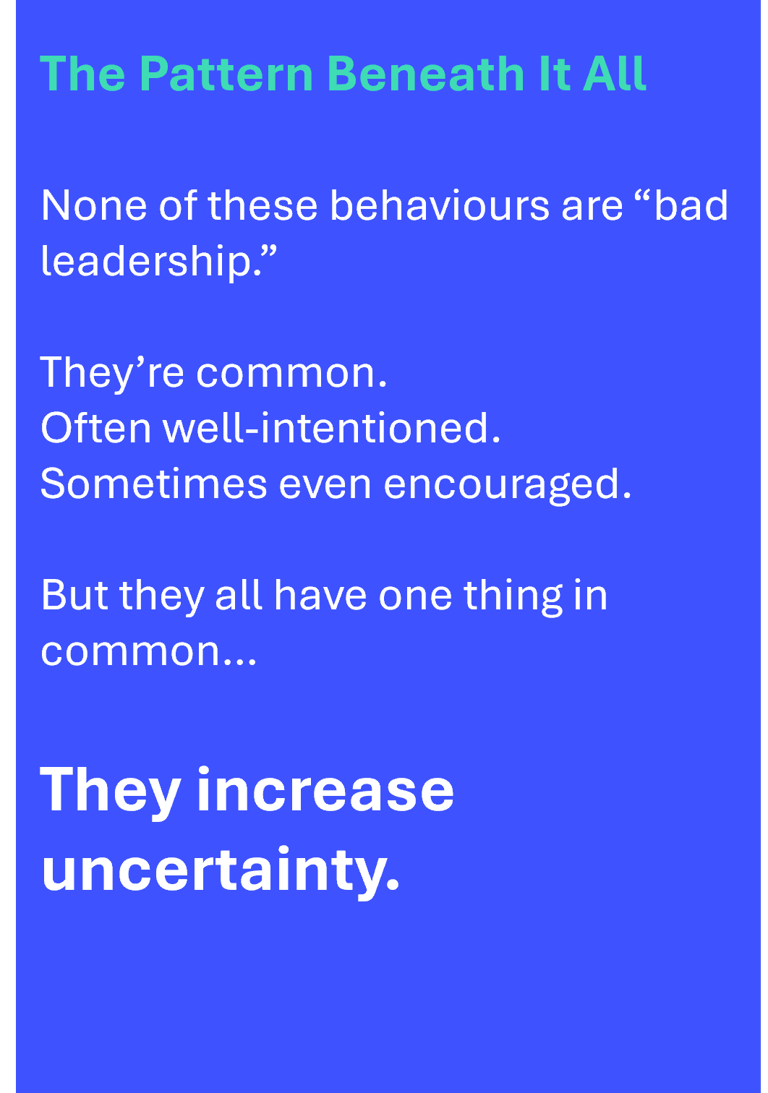
So leadership is not just about direction, it's about shaping the environment people use to predict what happens next.
And that means:
Reducing unnecessary uncertainty
Closing open loops
Creating clarity
Building predictable patterns
When leaders do this, they reduce cognitive load across the system.
When they don’t, they increase it.
Test the Open Loop
If you want to understand the impact of your leadership, ask yourself:
Where might I be leaving open loops that others are having to carry?
Because every open loop you leave…
…someone else’s brain is trying to close.
Great leadership isn’t about removing all uncertainty.
That’s not realistic.
But it is about being conscious of the unnecessary uncertainty you create.
Because every time you:
Leave something unclear
Delay a conversation
Soften a decision
Avoid naming what you see
… someone else’s brain is trying to close that loop.
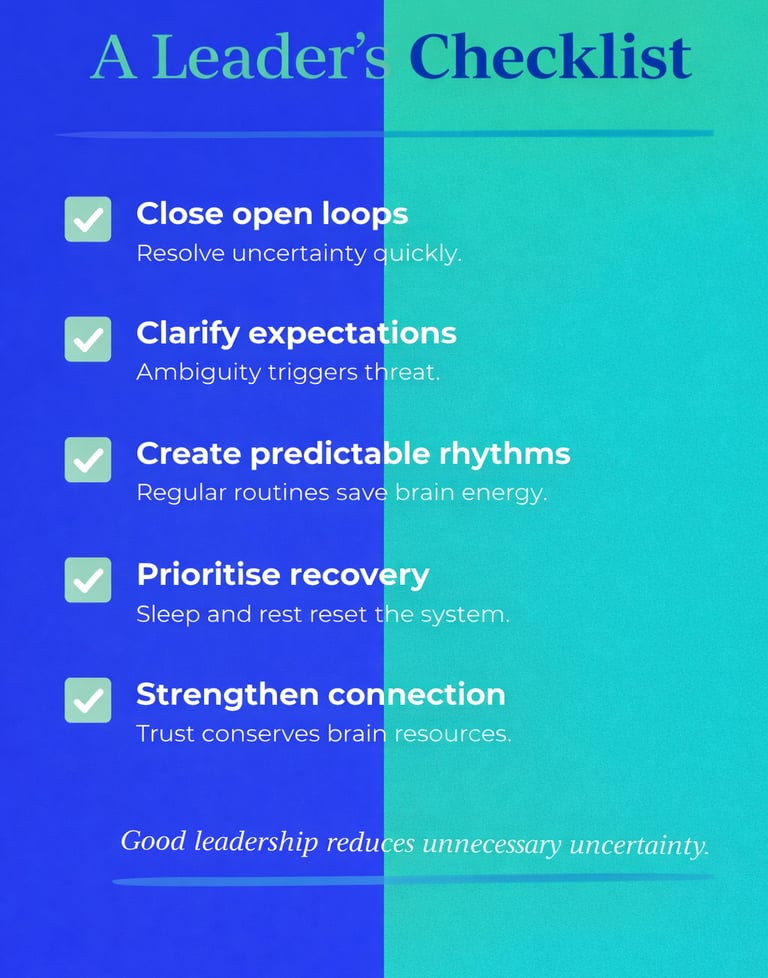
Clarity isn’t just good leadership.
It’s energy management.
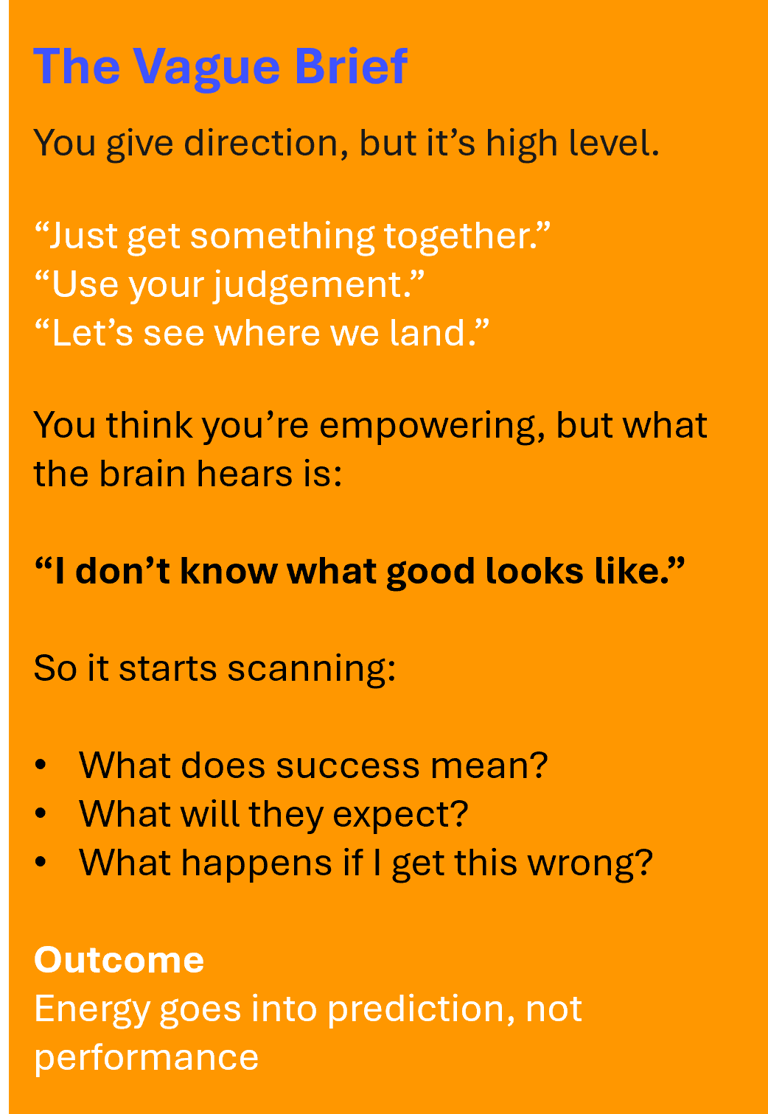
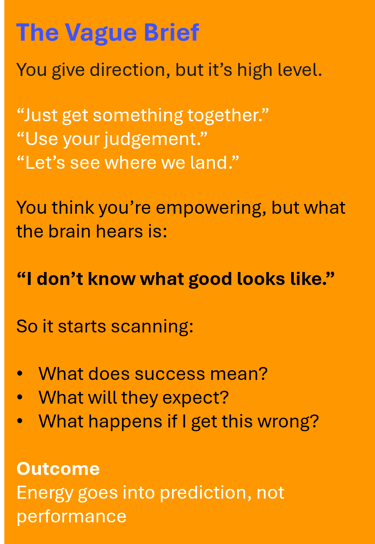
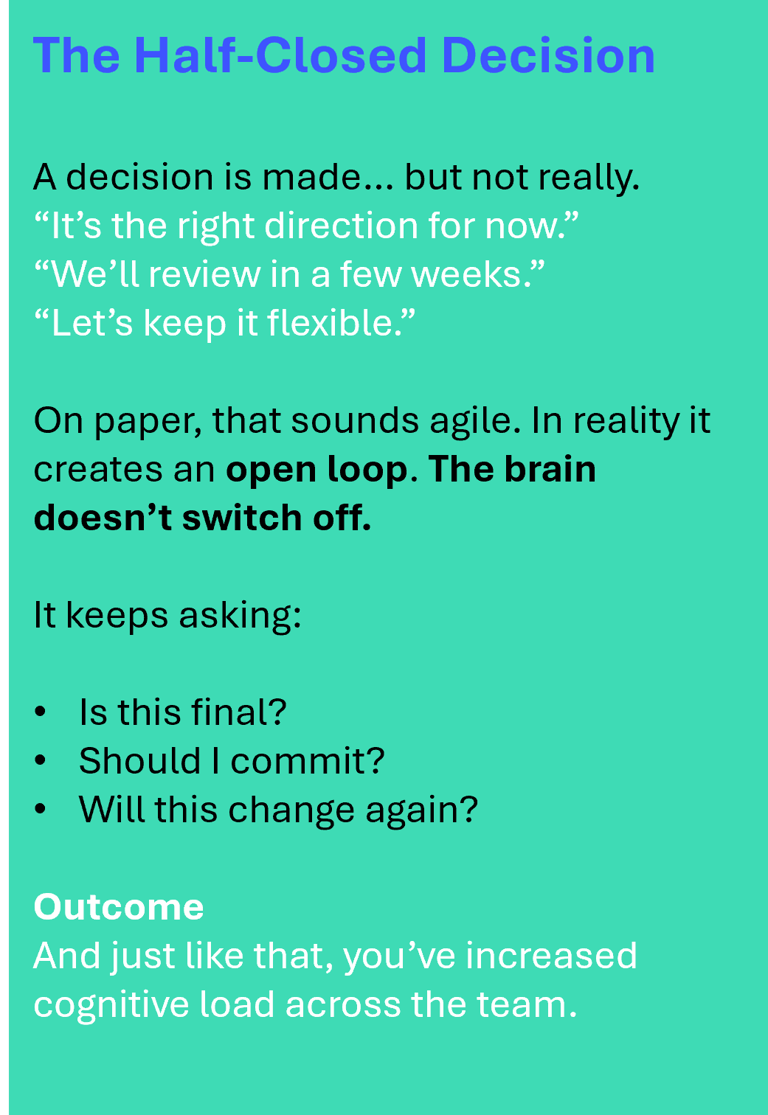
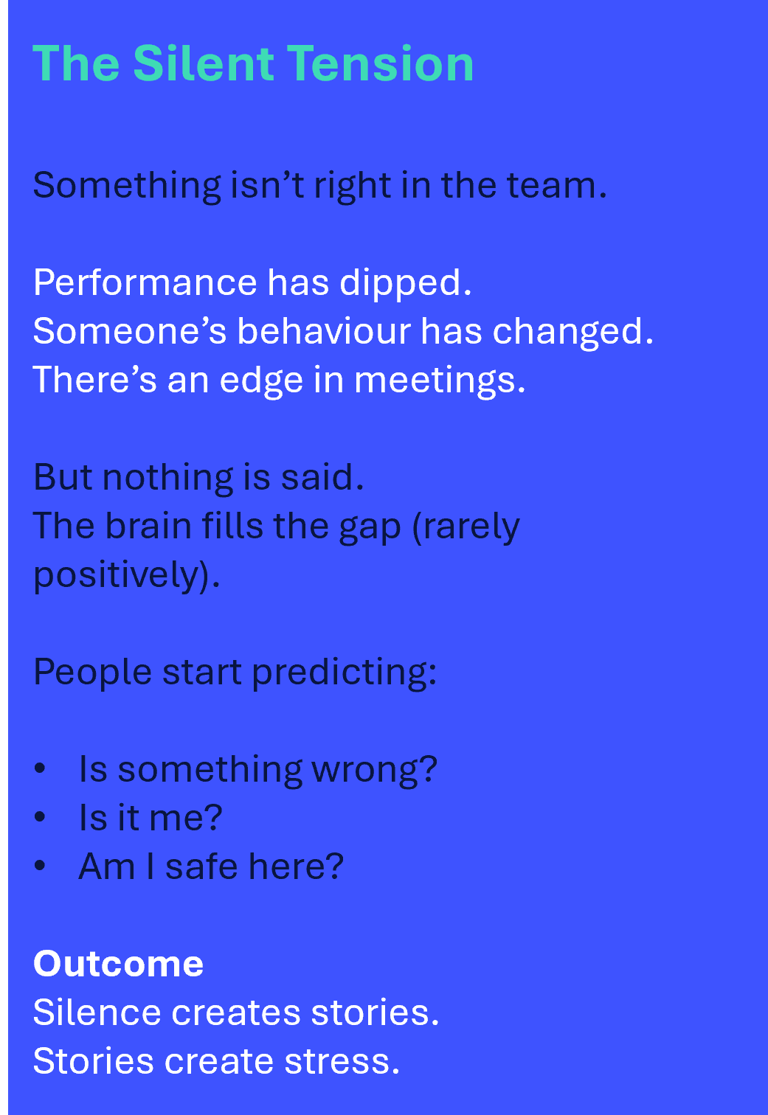
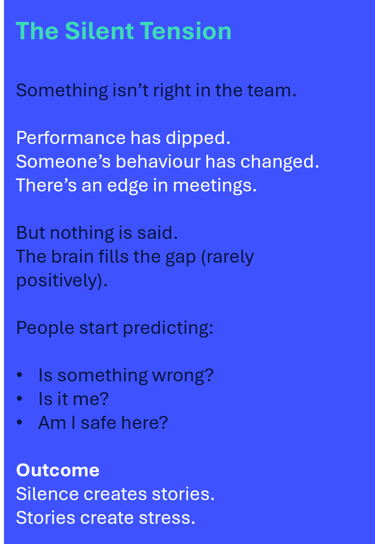
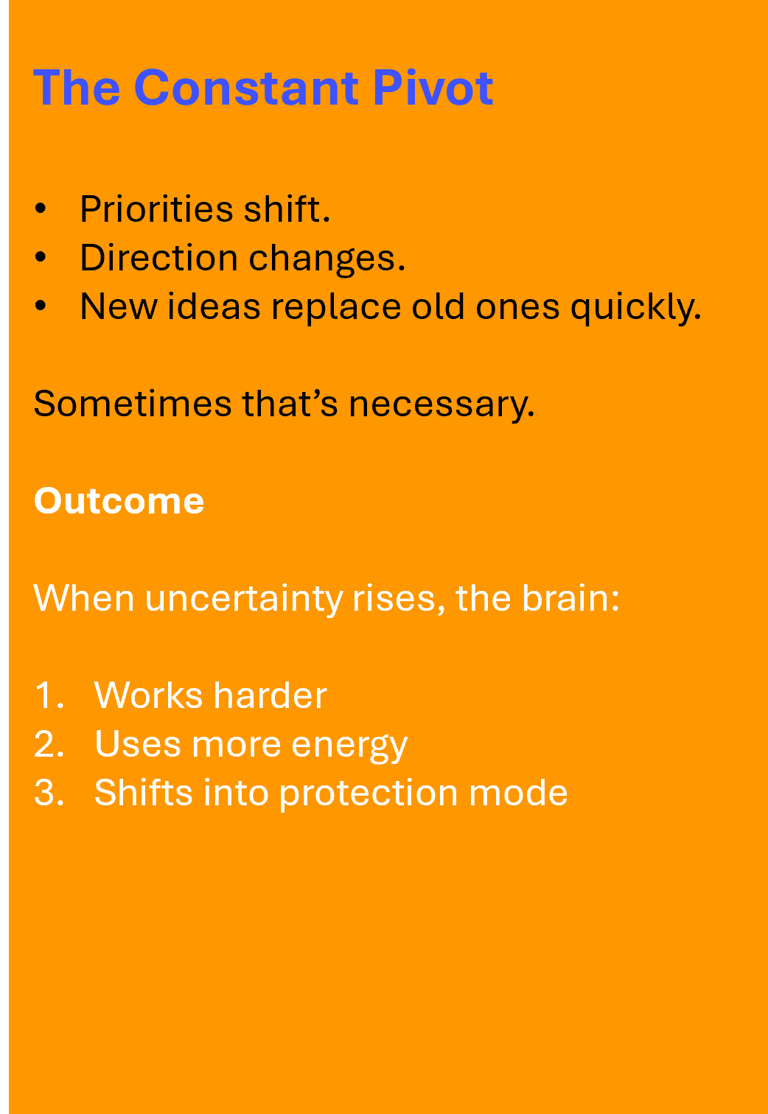
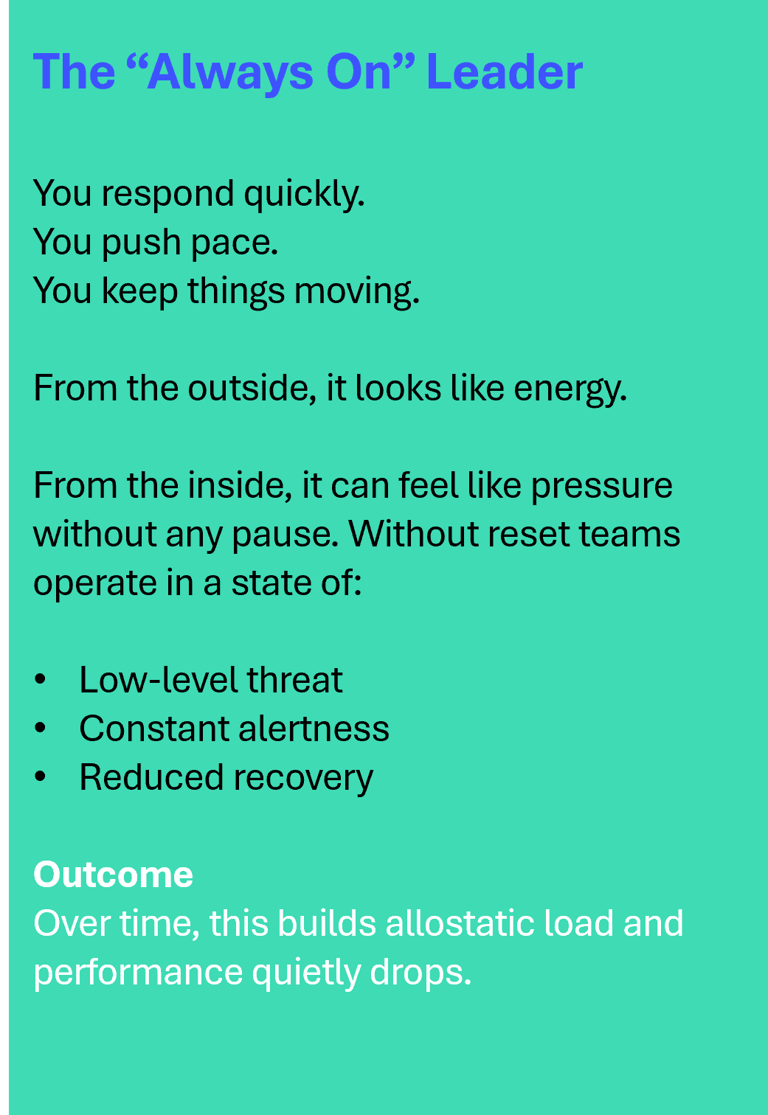
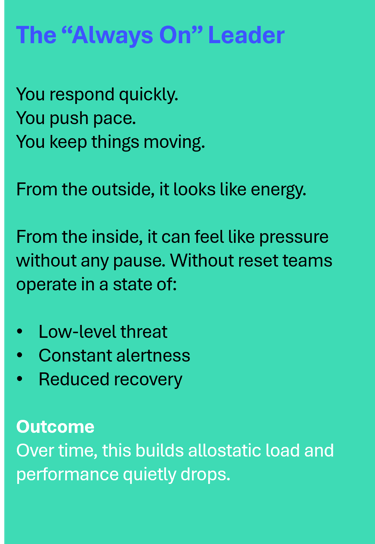
Where leaders create unnecessary work for the brain
Not through intention, it's through habit.
Tracy Filler is a leadership and organisational adviser who works with owners, boards and senior leaders, particularly in founder-led and generational businesses, when growth, succession or change demands a different way of leading. Through organisational discovery, strategic advisory and executive coaching, she helps leaders see the dependencies, behaviours and patterns that can be difficult to recognise from inside the business. Her approach creates space for honest thinking, challenge without judgement and a practical route from insight to action. She holds up the mirror and offers the map.



