
Assumed or Earned? The Kind of Respect That Defines Your Leadership


Would your team still follow you if your title disappeared tomorrow?
“The true measure of your leadership style is what still happens while you’re away from the business.”
I was told this by my first mentor just before I went on maternity leave, and he was right.
What happens in your absence reveals the culture you’ve really built, not the one you think you have.
Across organisations, too many leaders mistake authority for respect.
Titles, tenure, and track record can make it easy to assume respect automatically comes with the role. For a while, it can look that way, people listen, meetings run smoothly, and decisions are accepted and followed.
But genuine respect isn’t measured in politeness or silence, it shows up in the conversations people are willing to have with you, not just the ones they avoid.
Respect built on hierarchy is fragile. It delivers compliance, not commitment.
Genuine, earned respect isn’t about rank or status, it’s about fairness, competence, and behaviour under pressure. The Respect Gap Matrix below highlights what’s really happening when leaders rely on authority instead of authenticity, and what shifts when they begin earning respect instead of assuming it.
This article explores how to tell the difference between assumed and earned respect, and what leaders can do to strengthen the trust, credibility, and openness that keep teams performing at their best.
The Illusion of Respect
Leaders often read calm rooms and quick agreement as signs of respect. In reality, they can signal the opposite; a team that’s being careful, not confident. When people are quiet, it’s rarely because they have nothing to say. It’s usually because they’re not sure it’s safe to say it.
Authority Can Hide the Cracks
Respect can appear solid from the top, but brittle underneath. Title and position carry automatic authority, and with it comes an illusion; people appear engaged because hierarchy demands it. But compliance isn’t belief. When respect is assumed, performance holds steady, but initiative fades.
Power Shrinks Feedback
The more senior a leader becomes, the fewer people will tell them the truth. Without meaning to, leaders create a distance between facts, perception, climate controls.
Without challenge or truth, leaders start leading on assumption, and that’s when even good decisions miss the mark.
Assumed Respect Feels Comfortable - Until It Isn’t
It can last for months, even years, because it looks smooth. But then something breaks; a decision is challenged, a mistake lands badly, or an ambitious new hire asks “why?” That’s when a leader realises the difference between being respected and simply being complied with.
How a Respect Gap Forms
When respect is assumed, leaders lose the information and insight that keep them effective. Feedback quietens, honesty fades, and decision-making becomes based on filtered reality. Over time, trust erodes quietly, not through conflict, but through polite compliance.
Leaders who recognise this shift early can close the gap by returning to fairness, curiosity, and consistency, the core ingredients of earned respect.
Assumed or Earned?
How to Know The Difference...
Notice What Happens When You’re Not There
Assumed respect relies on your presence; earned respect continues in your absence. If the team maintains standards, energy, and collaboration when you’re not in the room, that’s the signal you’ve earned their respect.
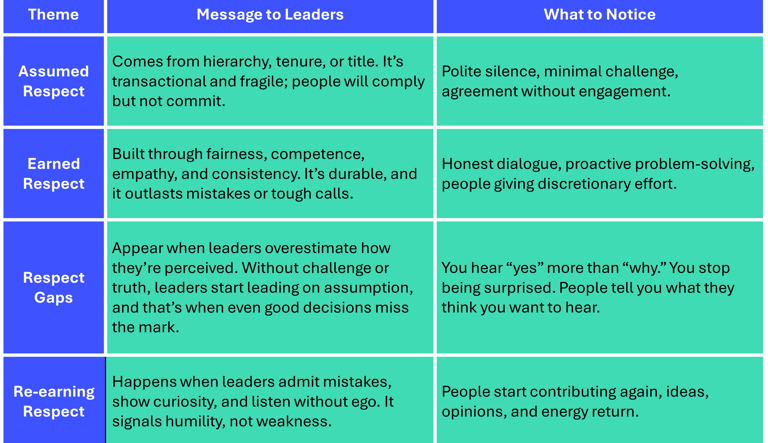
The Respect Gap Matrix
Respect isn't static, it shifts depending on how leaders show up. Here's how to recognise where you are.
FAIRNESS . CURIOSITY . CONSISTENCY
What Earned Respect Looks Like
Built, Not Automatic
Respect isn’t gifted with a title. It’s earned through how you show up when things get messy, the decisions you stand by, and the tone you set when pressure hits.
Fairness Over Favour
People forgive tough calls; they don’t forgive double standards. Explain your reasoning, even when it’s unpopular. It shows you value fairness over favour.
Challenge Without Fear
A respectful culture isn’t quiet, it’s honest. The strongest teams can disagree without it turning personal. When leaders welcome challenge, they signal confidence, not threat.
Competence with Care
Capability earns admiration; care earns commitment. The best leaders carry both - sharp on standards, steady on empathy, and honest enough to say, “I don’t know yet.”
Consistency Under Pressure
Respect doesn’t vanish when things go wrong, unless you do. People remember how you handle the bad days, not just the good ones, and then take your lead.
If progress only happens when you’re in the room, that’s not respect - it’s reliance.
Watch How People Disagree With You
In healthy environments, challenge feels respectful, not rebellious. When people can push back without fear of punishment, you’ve created space for earned respect to thrive. When disagreement disappears, or happens only in whispers, you’re managing compliance.
Listen to What Gets Said - and What Doesn’t
Respect lives in everyday communication. Pay attention to who speaks up, who hesitates, and who withdraws. The language of respect includes honesty, humour, and healthy friction. The absence of those is an early warning sign.
Test It Gently
Ask for feedback on your leadership, not your results. “What’s one thing I could do differently to make this team even stronger?” opens a door. What matters isn’t how people answer, it’s whether they feel safe enough to.
Building and Maintaining Respect from the Strongest Place
Start with Self-Respect
The tone you take with yourself is the one everyone else feels. When you hold your own boundaries, admit mistakes, and keep learning, people see the example before they hear the instruction. Self-respect sets the standard for how you expect to be treated, and how you treat others.
Be Clear, Then Be Kind
People respect clarity, even when they don’t agree. Say what you mean, explain your thinking, and do it with fairness. It’s easier to follow a leader who’s direct and decent than one who’s cautious and unclear.
Lead with Manner Before Matter
(credit to Leanne Drew-McKain Chief Executive National Psychosocial Safety Network, Australia)
As Leanne said in one of our Brainy Podcast conversations “manner before matter.” The way you lead the room often matters more than what you say in it. Your tone, timing, and presence can either open space or close it. Great leaders know their manner signals safety, and safety is what allows respect to take root.
Balance Standards with Support
Respect isn’t about being liked, it’s about being consistent. Set the bar high and stand beside your team while they reach it. Challenge without abandonment; support without rescue. People remember how you made them feel capable, not comfortable.
Stay Curious When It’s Easiest to Assume
When things are going well, it’s tempting to stop listening. That’s the danger zone. Keep asking questions, keep noticing, keep learning. Respect grows when curiosity stays alive.
Pause Before You React
Respect is often built or broken in the smallest moments; the quick response, the offhand comment, the sigh. The leaders who pause, breathe, and respond with intention show strength, not hesitation. That’s what earns respect that lasts.
Reflection
Respect is earned through how you show up when it matters most.
What would your team say still happens while you’re away?
And what might your manner be teaching them to emulate?.
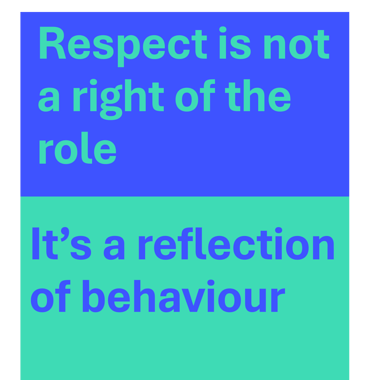
Respect isn't a badge you wear, it's a behaviour you repeat


Tracy Filler is a leadership and organisational adviser who works with owners, boards and senior leaders, particularly in founder-led and generational businesses, when growth, succession or change demands a different way of leading. Through organisational discovery, strategic advisory and executive coaching, she helps leaders see the dependencies, behaviours and patterns that can be difficult to recognise from inside the business. Her approach creates space for honest thinking, challenge without judgement and a practical route from insight to action. She holds up the mirror and offers the map.



